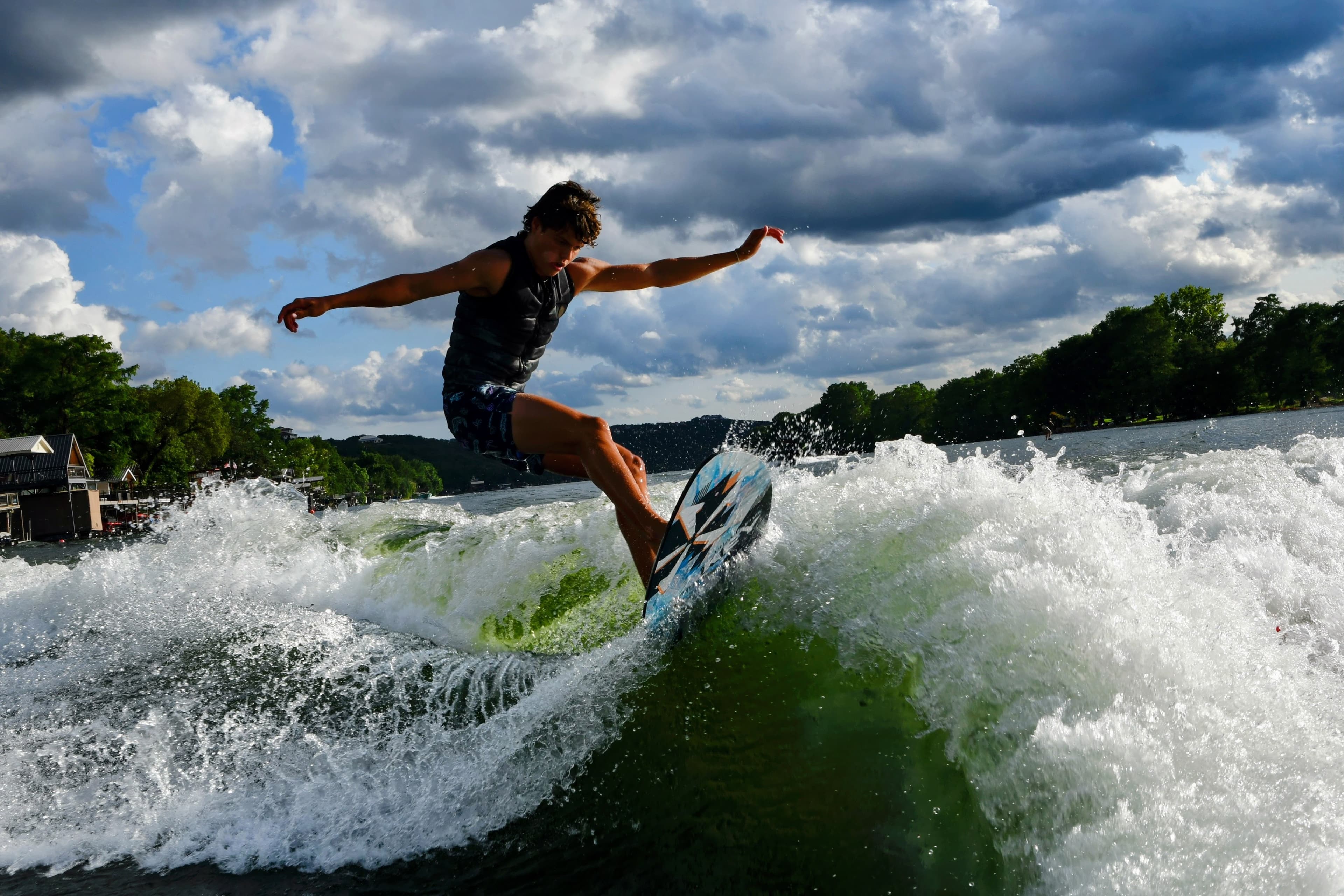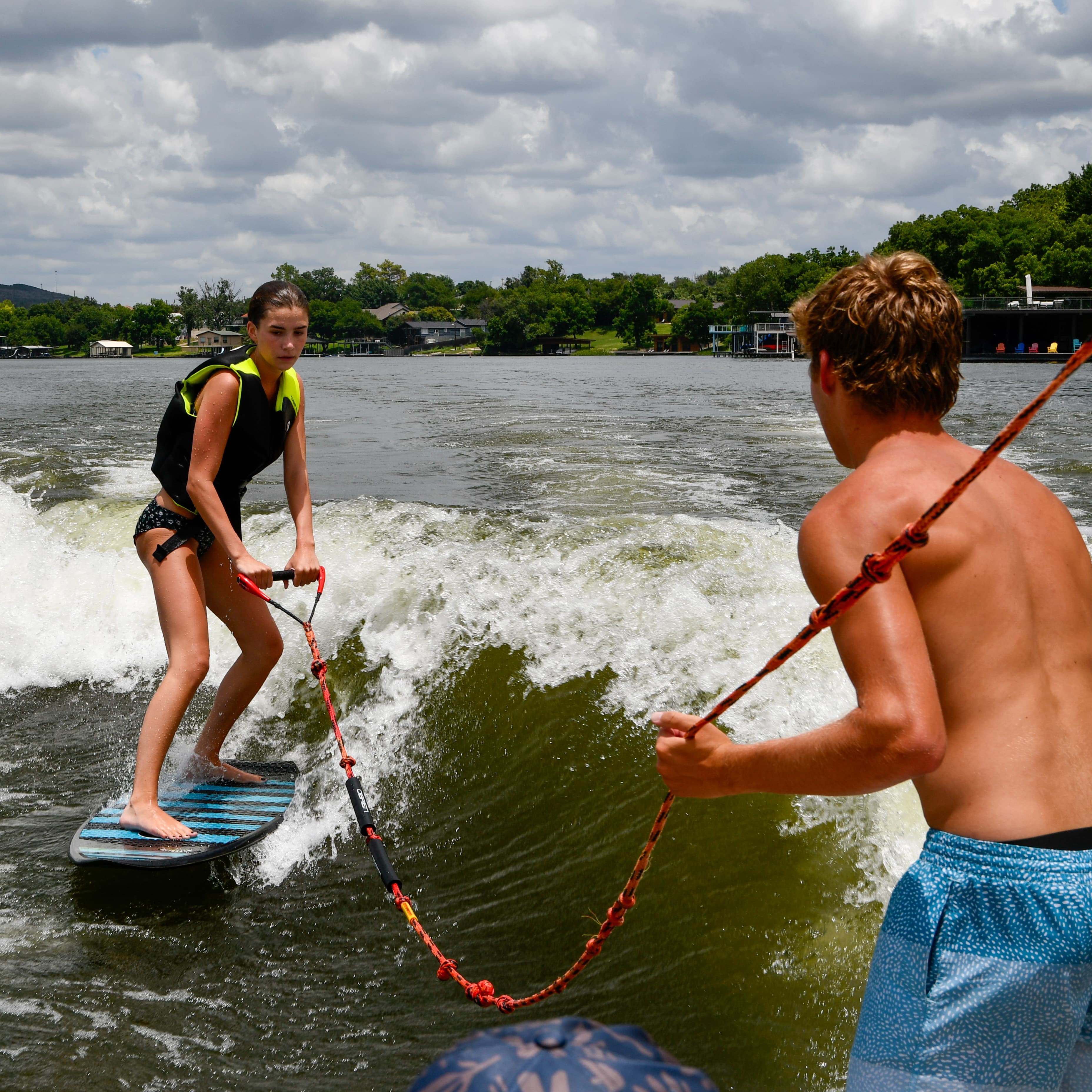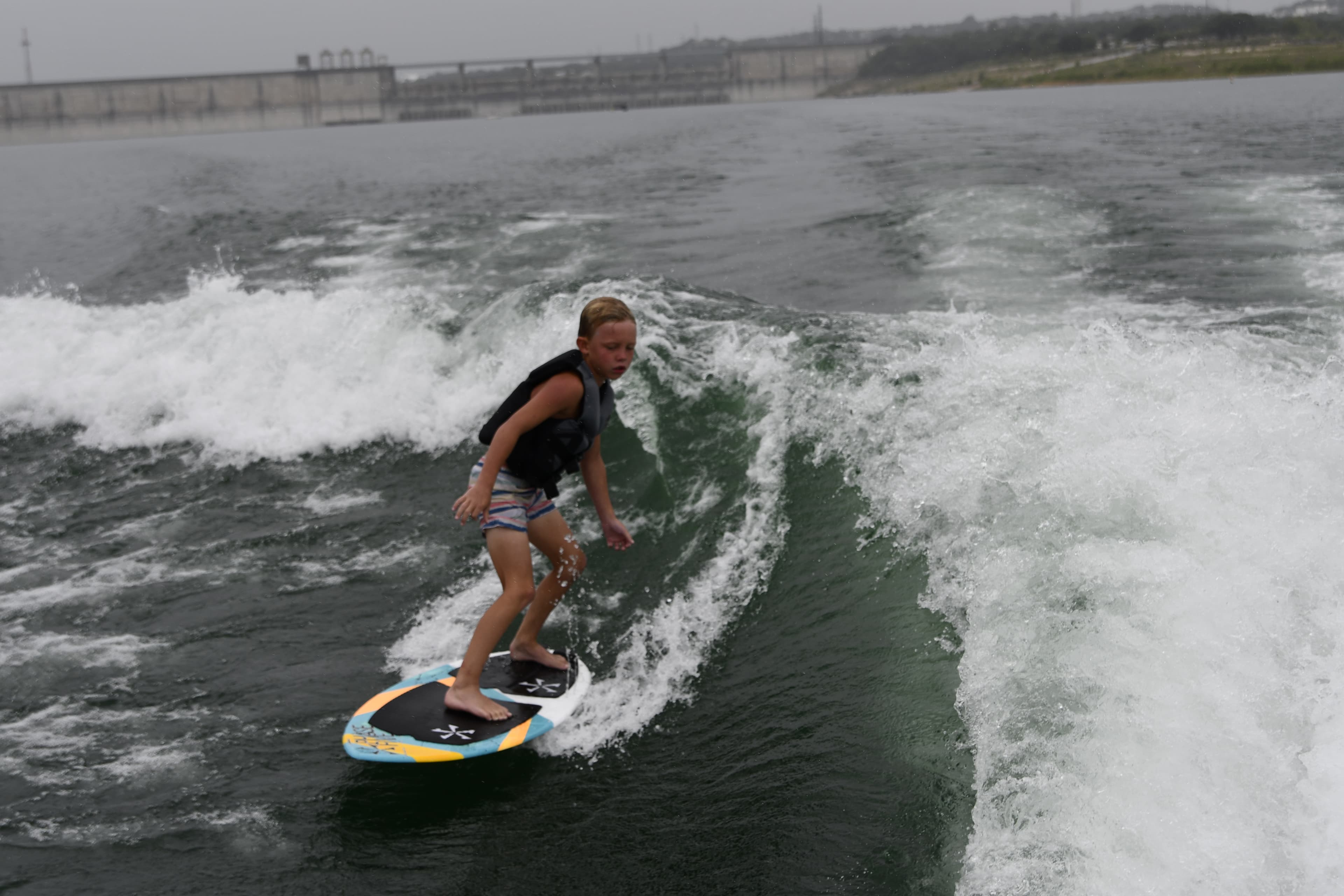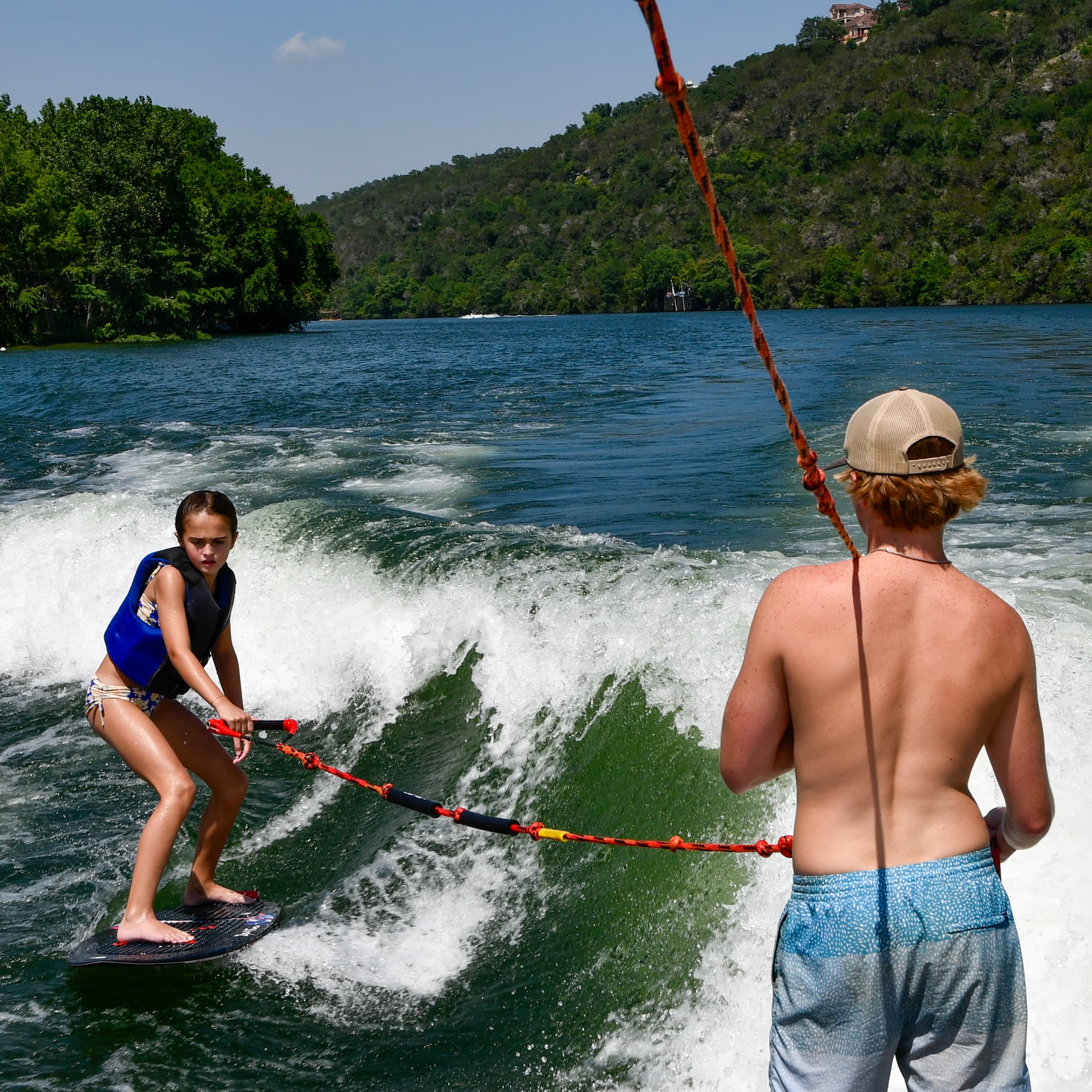
Wakesurfing is a tow-water sport in which a rider uses a short surfboard to surf the continuous wave created behind a specialized inboard wake boat — no rope skills required once you find the wave.
If you have been curious about wakesurfing but unsure where to start, this guide walks you through every stage: gear, the water start, dropping the rope, and reading the wave. We teach this progression daily out on Lake Travis and Lake Austin, and the steps below are exactly what our instructors use with first-timers.
What Do You Need to Wakesurf?
Before you get in the water, make sure you have the right setup. Wakesurfing has a few hard requirements that differ from wakeboarding or skiing.
The boat matters — a lot
Wakesurfing must be done behind an inboard or inboard-outboard (IBO/V-drive) wake boat. Outboard and stern-drive motors are not safe for wakesurfing because riders are close to the boat's propeller zone. According to the U.S. Coast Guard, carbon monoxide exposure from improperly configured boats is a serious hazard — another reason proper boat selection is non-negotiable.
Modern surf-specific boats like those we run at Board Bound Wake Co use ballast systems and "surf tabs" or wake-shaping technology to build a large, clean, surfable wave on one side of the boat.
Gear checklist
| Item | Notes |
|---|---|
| Wakesurf board | Larger (5'0"–5'6") for beginners; more surface area = more stability |
| Coast Guard–approved life vest | Required by law in Texas for all riders |
| Rope with a wide handle | Thick, short rope (65–75 ft) for getting up; you drop it once you're on the wave |
| Spotter or mirror | Texas law requires a spotter on board when towing a rider |
Step 1: Learn Your Stance
Before you ever get in the water, figure out whether you ride regular (left foot forward) or goofy (right foot forward). A quick test: have a friend give you a gentle push from behind and notice which foot you naturally step forward with. That foot goes toward the nose of the board.
The wave is created on one side of the boat, so your stance determines which side you surf on:
- Regular riders typically surf on the port (left) side of the boat
- Goofy riders typically surf on the starboard (right) side
Your captain will set up the wave on your side before you start.
Step 2: The Water Start
This is where most beginners need the most coaching, so be patient with yourself.
- Float on your back in the water with your knees tucked to your chest, board on your feet, and the rope across your lap.
- Keep your arms straight and the rope between your feet or just outside your front foot.
- As the boat begins to accelerate, let the boat do the work. Resist the urge to pull the rope toward you — keep your arms locked and let the tension stand you up.
- Once you feel your hips rising, push your heels down into the board and let your body swing upright.
- The boat speed for wakesurfing is slow — typically 9–12 mph — so the pull is gentle compared to wakeboarding.
Most common mistake: bending the arms and trying to muscle yourself up. Stay passive; the rope tension and buoyancy will bring you to standing naturally.
Step 3: Find Your Balance on the Wave
Once you are standing, resist the urge to look down at your feet. Pick a fixed point on the boat and keep your eyes up. Your body will follow your gaze.
- Feet roughly shoulder-width apart, knees slightly bent
- Weight centered — not too far on the heels (you'll wash out the back) and not too far on the toes (you'll nose-dive)
- Keep the rope handle loose in your hands; you are not relying on it for balance, just using it lightly as a reference point
The wave has a sweet spot — usually 6 to 10 feet directly behind the boat. If you feel yourself sliding back and losing speed, press down on your front foot slightly to move up the wave. If you feel like the wave is cresting over your board, ease weight to your back foot and drift back a little.
Step 4: Drop the Rope
Dropping the rope is the milestone every new wakesurfer works toward, and it usually happens faster than you expect.
- Once you feel comfortable and stable in the wave's pocket, toss the rope handle gently toward the boat (aim for the swim platform or a spotter ready to catch it).
- Shift your arms out slightly for balance — think of it like balancing on a skateboard.
- Use small weight shifts through your feet to stay in the pocket. Front foot pressure = moves you forward on the wave. Back foot pressure = pulls you back.
If you fall, no problem — the boat circles back, throws the rope, and you start over. There is no wrong number of attempts.
Step 5: Start Working on Basic Maneuvers
Once you can consistently ride without the rope, you can start playing with the wave:
- Pumping: Flex your knees and push down rhythmically through the board to generate speed and move up and down the wave face.
- Heel-side turns: Shift weight gently toward your heels to carve up the wave.
- Toe-side turns: Shift toward your toes to carve back down.
- Stalling: Back off to the low end of the wave and feel how slow you can go before falling off — great for building wave-feel.
These fundamentals are the foundation for more advanced moves like cutbacks, 360s, and aerials down the road.
Tips That Speed Up the Learning Curve
- Ride in the morning. Lake Travis and Lake Austin are at their glassiest before 10 a.m. Flat water makes the wave cleaner and the ride smoother — a real advantage for beginners.
- Watch before you ride. Spend a few minutes watching someone else start from the water. Seeing the stance and the pull in action makes a big difference.
- Start on the larger board. Experienced surfers ride smaller, more maneuverable boards. Beginners should always start big.
- Book a lesson. An instructor watching your body position from the boat can diagnose problems in seconds that could take you hours to figure out alone.
Ready to Get on the Water?
The fastest way to learn is with an experienced instructor calling out adjustments in real time. Our team at Board Bound Wake Co offers private lessons on Lake Travis and Lake Austin tailored to exactly where you are as a rider — first-timer or someone working on dropping the rope for the first time.
If you want to immerse your kids in the sport over a full week, our summer camp program runs on both Lake Austin and Lake Travis with certified instructors, daily lunch, and progressive instruction from day one through the end of the week.
Or if you just want to get a group on the water and try it all out together, book a private charter and we will handle everything from there.
Frequently asked questions
- How long does it take to learn to wakesurf?
- Most beginners can get up and ride on the wave within one session. Dropping the rope typically happens by the end of a first or second session with good instruction. Building confidence and starting to carve usually takes a few outings.
- What is the difference between wakesurfing and wakeboarding?
- Wakeboarding uses a longer rope and a board with foot bindings — you stay connected to the rope the whole time and ride at higher speeds. Wakesurfing uses a short, unbound surfboard and is done at low speeds (9–12 mph). The goal in wakesurfing is to drop the rope and surf the boat's wave freely. Wakesurfing is generally considered easier on the body and more accessible for beginners.
- Is wakesurfing safe for beginners who are not strong swimmers?
- All riders wear a Coast Guard–approved life vest, which keeps you afloat regardless of swimming ability. That said, basic comfort in the water makes the experience more enjoyable. Talk to your instructor before your session if you have concerns — they can walk you through what to expect if you fall.
- What speed does the boat go for wakesurfing?
- Wakesurf boats typically travel between 9 and 12 mph, which is much slower than wakeboarding speeds. This slower pace creates the large, rolling wave that riders surf and also makes falls much less jarring.