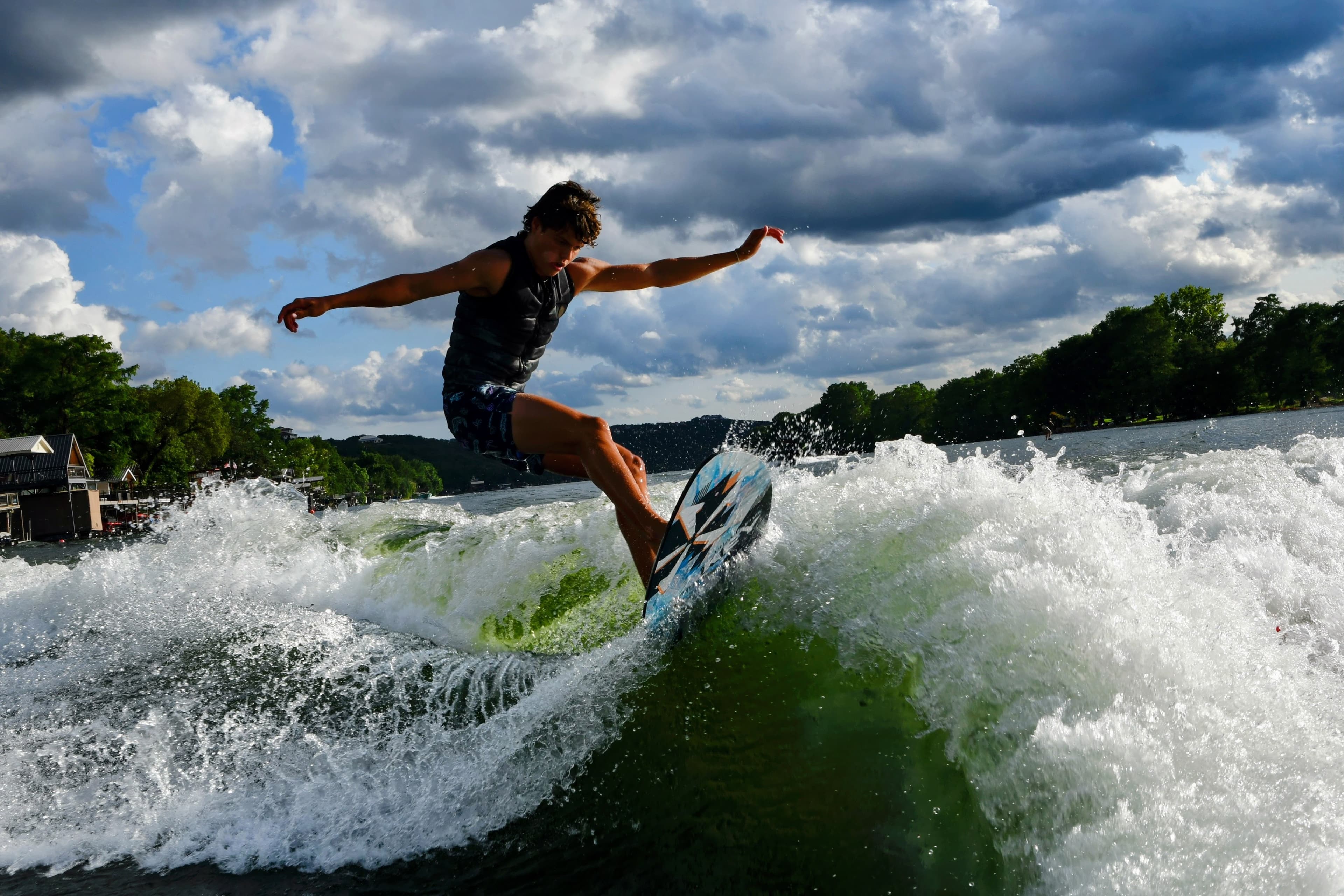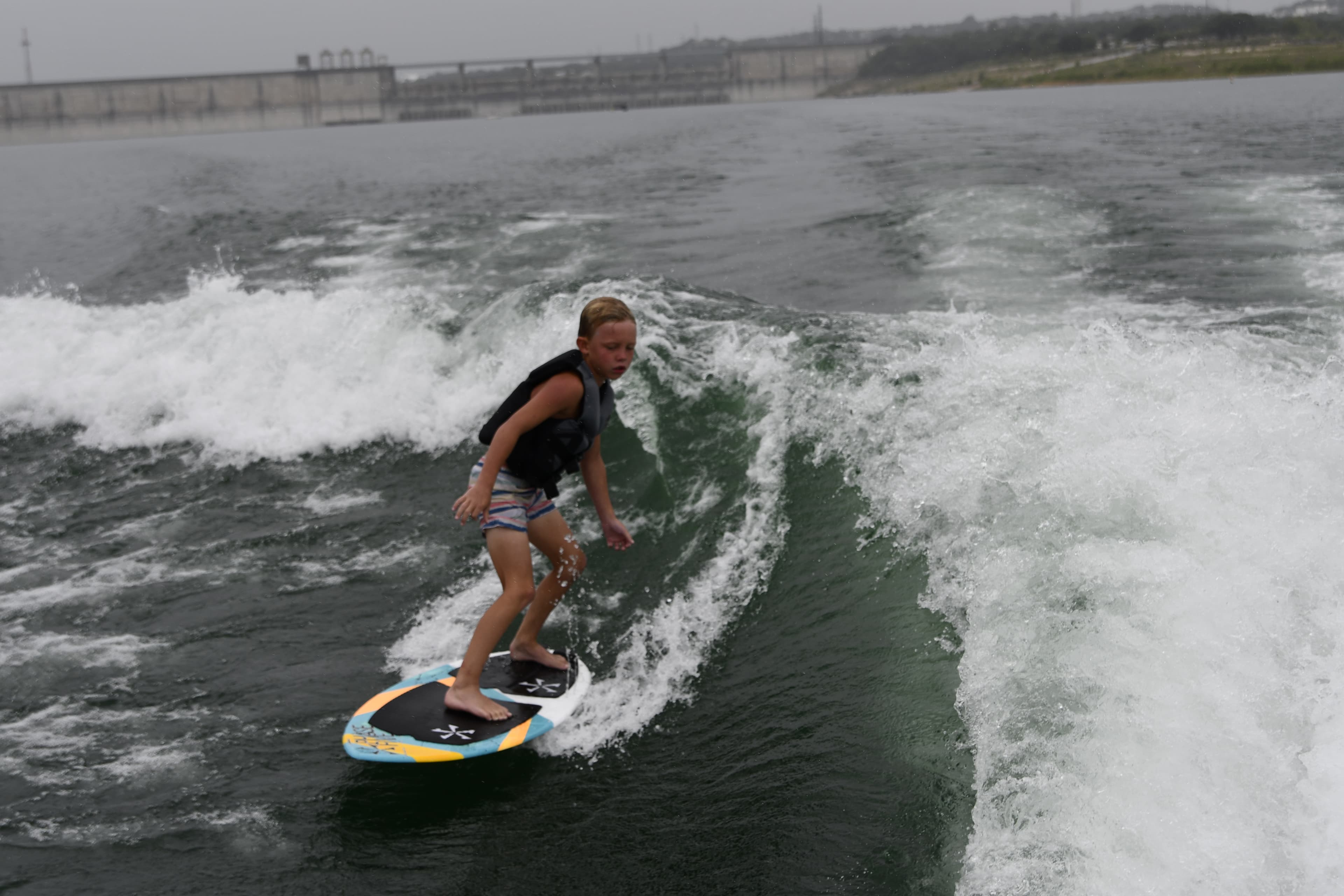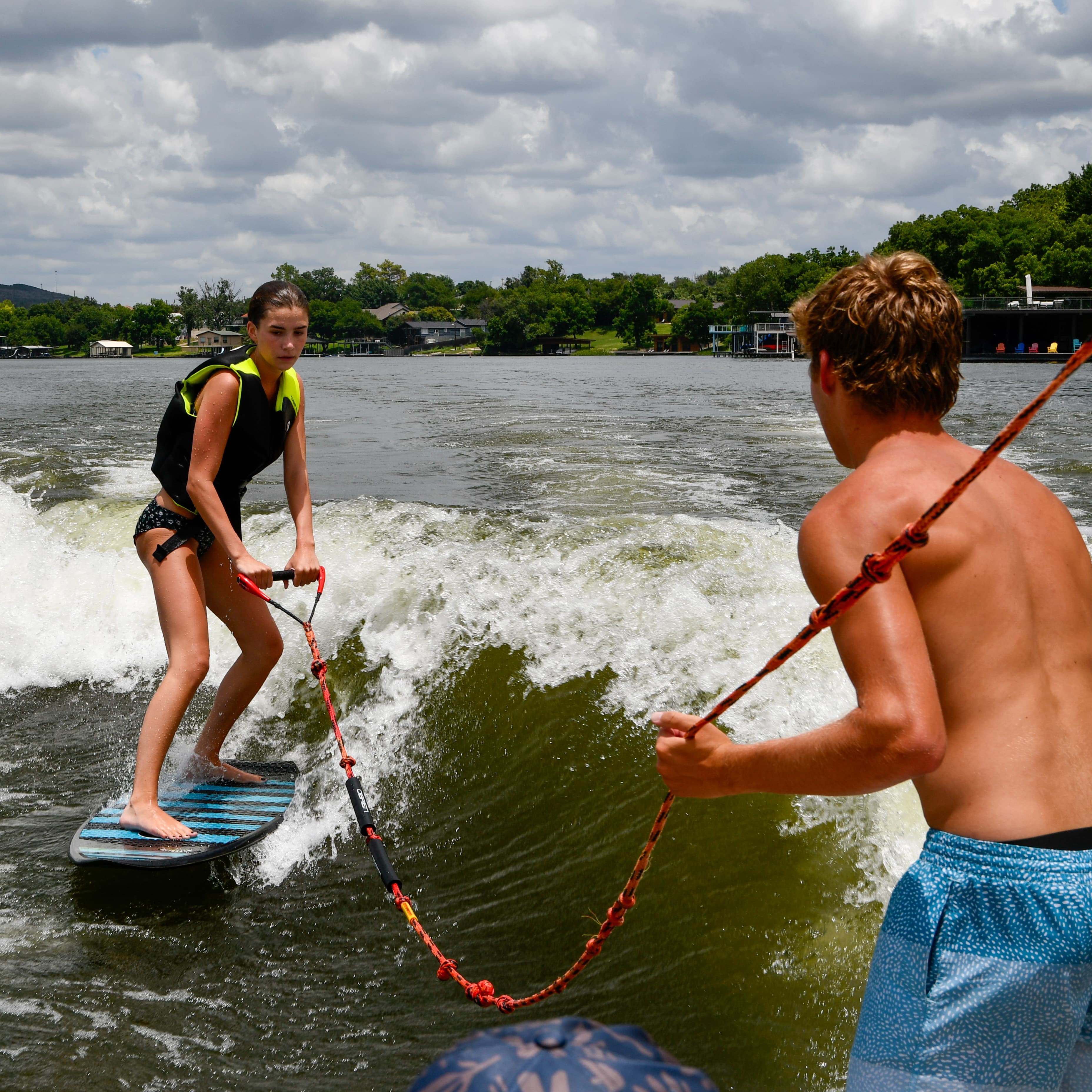
Board Bound Wake Co operates private boat charters and wakesurfing lessons on Lake Travis, Lake Austin, Lake LBJ, and Lake Marble Falls, with captains who manage everything from pre-dawn safety checks to sunset sets for guests of all skill levels.
Most people step onto the dock, hand their captain a cold drink, and assume the day just magically unfolds. It does feel that way — and that's exactly the point. But behind the effortless lake day is a captain who was up before you finished your first cup of coffee. Here's what that day actually looks like.
7:00 AM — The Boat Doesn't Check Itself
The day starts at the dock, not at the boat launch. Before any guest arrives, the captain walks the full boat. That means checking the ballast system, confirming the wake shaper is seated correctly, and testing the Bluetooth sound system so nobody's playlist skips on the first drop. Life vests get pulled and counted — Coast Guard-approved vests in enough sizes to cover everyone from a six-year-old to a fully grown adult, because USCG regulations require every person on board to have a properly fitting PFD. The lily pad gets inspected for cracks. Coolers get packed with ice.
Fuel is confirmed topped off. Our charters include fuel, so there's no nickel-and-diming mid-lake — but that also means the captain is responsible for making sure the tank is actually full before departure.
The whole check takes thirty to forty-five minutes on a normal morning. On a busy weekend, it takes longer, because busy weekends mean more time pressure and zero room for surprises.
8:30 AM — Guest Arrival and the Real First Impression
By the time guests arrive at the dock — whether that's Walsh Boat Landing on Lake Austin or Mansfield Dam Park on Lake Travis — the boat is clean, the ice is cold, and the captain is ready to talk through the day.
This is one of the most important moments of the morning. A good captain reads the group quickly. Are these experienced riders who want to get straight into the water? A family with young kids who need extra time on the safety brief? A bachelorette party that wants to cruise and jump off the bow more than they want to wakesurf? The plan adapts on the spot.
Every session opens with a comprehensive safety briefing — what to do if someone falls, how the hand signals work on the water, what to expect from the wake. For private lesson guests, that transitions into on-boat drills: practicing stance and balance before anyone gets wet.
9:00 AM — On the Water
The first stretch of the morning is often the best. Lake Travis and Lake Austin are at their glassiest before boat traffic picks up, and a good captain knows exactly where to position for the cleanest water. On Lake Travis, that might mean heading into a quieter cove away from the main channel. On Lake Austin, it means timing the run to avoid the busiest stretches near the bridges.
For lesson guests, the captain is also the coach. They're watching body position from the boat, adjusting rope length, tweaking boat speed, and calling out corrections between runs. Most beginners get up and riding within their first session — not because it's easy, but because the coaching is deliberate and patient.
For charter guests who aren't surfing, the captain is also managing the full experience: cueing up the right songs, suggesting when to hop on the lily pad, pointing out a hawk circling the hill country ridge above the shoreline. The lake has a lot to offer if someone's paying attention to it.
Reading the Water All Morning
One thing guests rarely notice is how much a captain is watching the conditions. Wind direction can shift a wake from clean to choppy in twenty minutes. A ski boat running parallel two hundred yards away can send a cross-wake that catches a beginner off-guard. A good captain is constantly repositioning, adjusting, anticipating.
On Lake Travis, with 19,000 acres of reservoir to work with, there's almost always a patch of good water somewhere. Finding it is part of the job.
12:00 PM — Midday Transition
Depending on the charter length, midday might mean a swimming stop, a lap around a cove, or switching sports. Charter guests on our longer packages get the full range — wakesurfing, wakeboarding, tubing, swimming. The captain keeps an eye on energy levels and lake traffic, timing the more technical water sports for the quieter windows.
For summer camp days, midday is lunch on the dock — the captain transitions into something closer to a youth counselor, making sure every kid is hydrated, sunscreened, and having the kind of day they'll talk about in September.
3:00 PM — Afternoon Sets and the Sunset Window
Afternoons on Lake Travis have a rhythm. Traffic picks up mid-afternoon, then thins out again as the day cools. A captain who knows the lake knows when to pause and when to make the most of the lull. The light in the Texas hill country gets dramatic in the late afternoon — long shadows across limestone bluffs, the water turning from blue-green to gold.
Some of our four- and five-hour charters are timed specifically to catch that window. Wakesurfing into a Texas hill country sunset is not a subtle experience.
Wrapping the Day Right
The last set of the day is often someone's best. Nerves are gone, the body has figured out the balance, and the water is softening as the wind drops. The captain watches for that moment and makes sure the guest gets one more run when everything clicks.
Then comes the ride back to the dock — cooler packed up, boards rinsed, everyone already planning the next trip.
What Stays with You
Captaining isn't just boat operation. It's reading people, managing conditions, teaching under pressure, and keeping a group of strangers safe while making sure they have the best day of their summer. The lake throws different problems every single day — no two sessions are the same on Lake Travis or Lake Austin.
That variability is exactly what we love about it. If you want to see what a day on the water with us actually looks like, the best way is to come out and ride.