Wakesurfing — the practice of riding a surfboard on the endless wave generated directly behind a moving boat — has roots stretching back to the 1950s, long before anyone used the word "wakesurf."
How Did Wakesurfing Begin?
The story starts on the open water with barefoot skiers and trick-ski enthusiasts who noticed that a boat's wake produced a rideable swell. By the early 1960s, a handful of daring riders in California and Florida were experimenting with letting go of the tow rope while crouching close behind the boat's stern. The wave was small and inconsistent by today's standards, but the idea — that you could surf behind a motorboat indefinitely, without a rope, without the ocean — was genuinely revolutionary.
Early footage and photographs from the 1960s show riders on thick, cumbersome boards that looked more like paddleboards than surf shapes. The boats were equally ill-suited to the task: straight-hulled ski boats produced a short, steep wake that was hard to stay on. Riding it was a party trick, not a sport.
The Inboard Era Changes Everything
The real breakthrough came with the widespread adoption of direct-drive and V-drive inboard boats in the 1980s and 1990s. Unlike outboard or stern-drive motors, inboards place the propeller under the hull, away from a surfer riding close to the stern. That shift removed the safety hazard that had kept early experimenters at arm's length, and it let riders position themselves deep in the pocket of the wave. According to the World Wake Surfing Association (WWSA), the sport began formalizing competition structures in the early 2000s, which pushed both boat manufacturers and board shapers to optimize their equipment specifically for wake surfing.
When Did Wakesurfing Become a Real Sport?
The early 2000s were the turning point. Several developments converged at roughly the same time:
- Dedicated wake boats — particularly V-drive hulls from brands like Correct Craft, Mastercraft, and Malibu — proved far superior at generating a large, clean wave. Manufacturers began designing hulls and ballast systems with surfing specifically in mind.
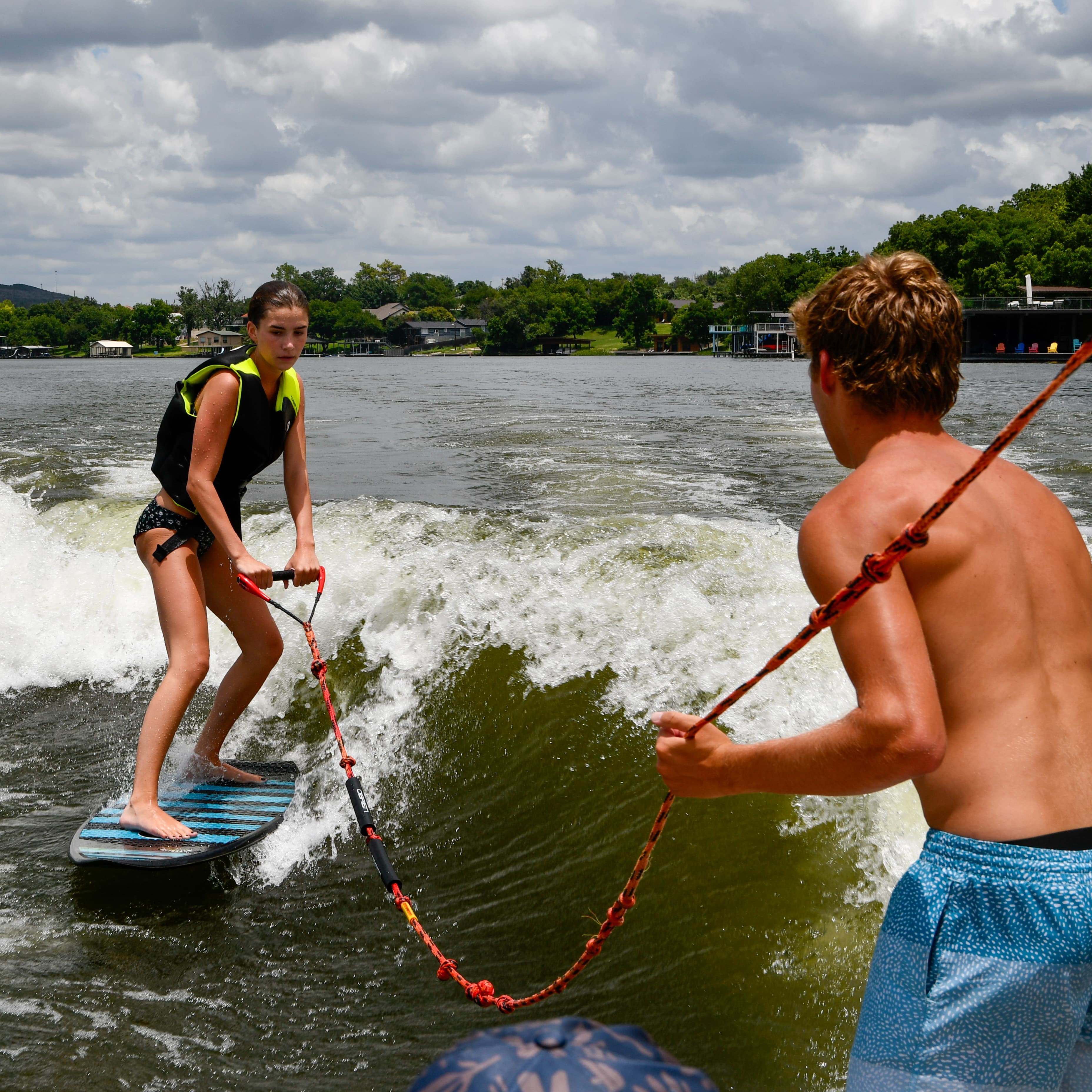
- Purpose-built wakesurf boards appeared, drawing on surf shaping traditions but tuned for slower boat speeds (typically 10–12 mph) and the predictable push of a wake rather than the variable energy of ocean swells.
- The first formal competitions gave the sport legitimacy and a shared vocabulary of tricks and judging criteria.
The World Wake Surf Championships, one of the sport's most prominent annual events, became a showcase for both the skim and surf disciplines that now define competitive wakesurfing. Riders are judged on wave usage, trick difficulty, consistency, and style — a judging framework borrowed partly from competitive surfing and partly from wakeboarding.
Skim vs. Surf: Two Tribes
As the sport grew through the 2000s and into the 2010s, it split into two clearly distinct disciplines:
| Discipline | Board Style | Ride Feel | Typical Tricks |
|---|---|---|---|
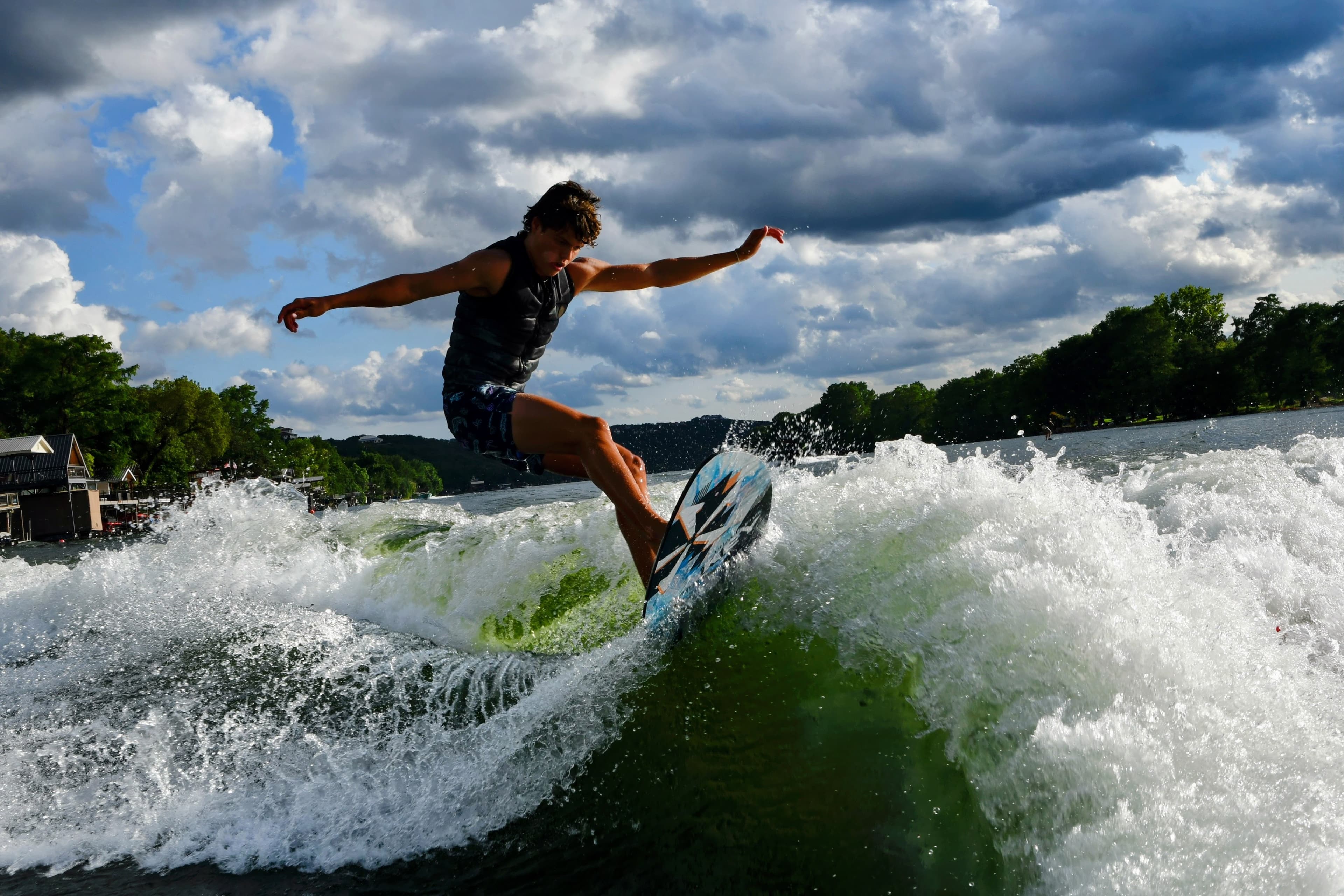
| Surf style | Thicker, three-fin setup | Powerful, drive-oriented | Carves, snaps, aerials |
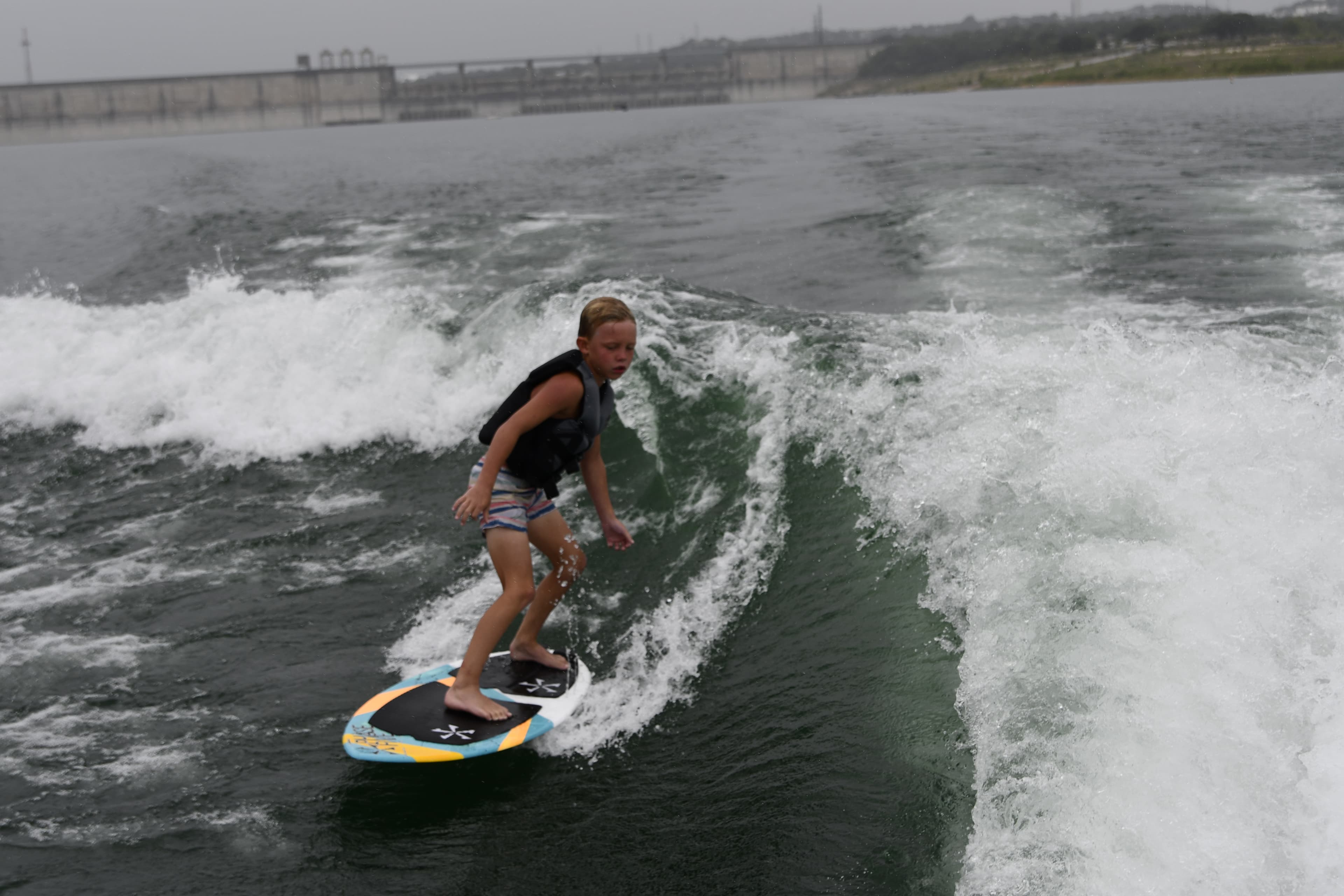
| Skim style | Thin, minimal fins | Loose, skate-like | Shuvits, body varials, surface spins |
Both disciplines require the rider to drop the rope within seconds of standing up and generate their own speed by pumping the board on the wave face — a technique that takes most beginners a few sessions to master but becomes intuitive quickly. That rope-free, endlessly renewable wave is what separates wakesurfing from wakeboarding and makes it accessible to a much wider age range.
How the Equipment Evolved
Board design accelerated dramatically once shapers realized the wake wave had very different physics from an ocean break. Ocean waves move fast and change shape constantly. A boat wake moves at a fixed speed, has a predictable shoulder, and provides consistent push. Builders could therefore optimize for that specific energy pocket in ways ocean shapers never could.
Modern surf-style wakesurf boards typically feature:
- Rocker lines tuned to the 10–12 mph boat speed range
- Concaves and channels that maximize drive from a gentler wave
- Lightweight construction (epoxy and carbon laminates) to enhance maneuverability
Brands like Phase Five pushed skim-style boards into the mainstream with aggressive, skate-influenced shapes that made technical surface tricks accessible to intermediate riders. At Board Bound Wake Co, Phase Five boards are a crew favorite — we reach for them regularly on Lake Travis and Lake Austin.
The Ballast Revolution
Perhaps the single biggest technical leap in wakesurfing's history wasn't the board — it was the ballast system. Early inboard boats made modest waves; competitive riders wanted mountains of water. Through the 2000s and 2010s, manufacturers raced to add factory ballast bladders, hard tanks, and eventually surf-shaping tabs and fins that could push hundreds — and then thousands — of gallons of extra weight to the correct side of the hull.
Systems like Surf Gate (introduced by MasterCraft) and similar proprietary technologies allowed riders to dial in wave shape, height, and length from a touchscreen on the dash, switching between regular and goofy-foot setups with a tap. What had taken early wakesurfers an entire morning of repositioning coolers and gear to approximate could now be done in seconds. The result was waves that legitimately rivaled small ocean swells in power and length.
Where Is Wakesurfing Now?
Wakesurfing today is one of the fastest-growing watersports in North America. Unlike wakeboarding, which demands significant upper-body strength for handle passes and inverts, wakesurfing has a lower barrier to entry — older adults, younger kids, and riders recovering from injuries gravitate toward it. Its community skews toward family-friendly and all-ages in a way wakeboarding's never quite managed.
The competition scene continues to grow. The World Wake Surfing Association sanctions events across North America and internationally, and the trick vocabulary expands each season as riders push aerial rotations and above-the-lip maneuvers that would have seemed impossible on the tight wakes of 1990s boats.
If you want to trace your own line in that history, the private lessons at Board Bound Wake Co put you behind a purpose-built wake boat on Lake Travis or Lake Austin — the same clear hill country water where a lot of Texas riders caught their very first wave.
The next chapter of wakesurfing's story is still being written, one dropped rope at a time.
Frequently asked questions
- Who invented wakesurfing?
- Wakesurfing has no single inventor. It grew organically from barefoot skiing and trick-ski culture in the 1950s and 1960s, when riders behind inboard boats discovered they could drop the rope and ride the stern wake like a small ocean swell. Formal competition and dedicated equipment didn't emerge until the early 2000s.
- What is the difference between skim-style and surf-style wakesurfing?
- Surf-style boards are thicker, use a three-fin setup, and emphasize powerful carves and drive on the wave. Skim-style boards are thinner with minimal fins, producing a loose, skate-like feel suited to surface spins, shuvits, and body varials. Both disciplines are judged in major competitions.
- What boat speed is used for wakesurfing?
- Most wakesurfers ride at boat speeds between 10 and 12 mph. That slower speed — compared to wakeboarding's 18–23 mph — is part of what makes wakesurfing accessible to beginners and older riders.
- How did ballast systems change wakesurfing?
- Factory ballast bladders, hard tanks, and surf-shaping tabs allowed modern wake boats to produce much larger, more powerful waves by shifting thousands of pounds of water to the correct side of the hull. Systems like Surf Gate let riders dial in wave shape and switch stances from a touchscreen, transforming the sport's ceiling for both beginners and competitors.