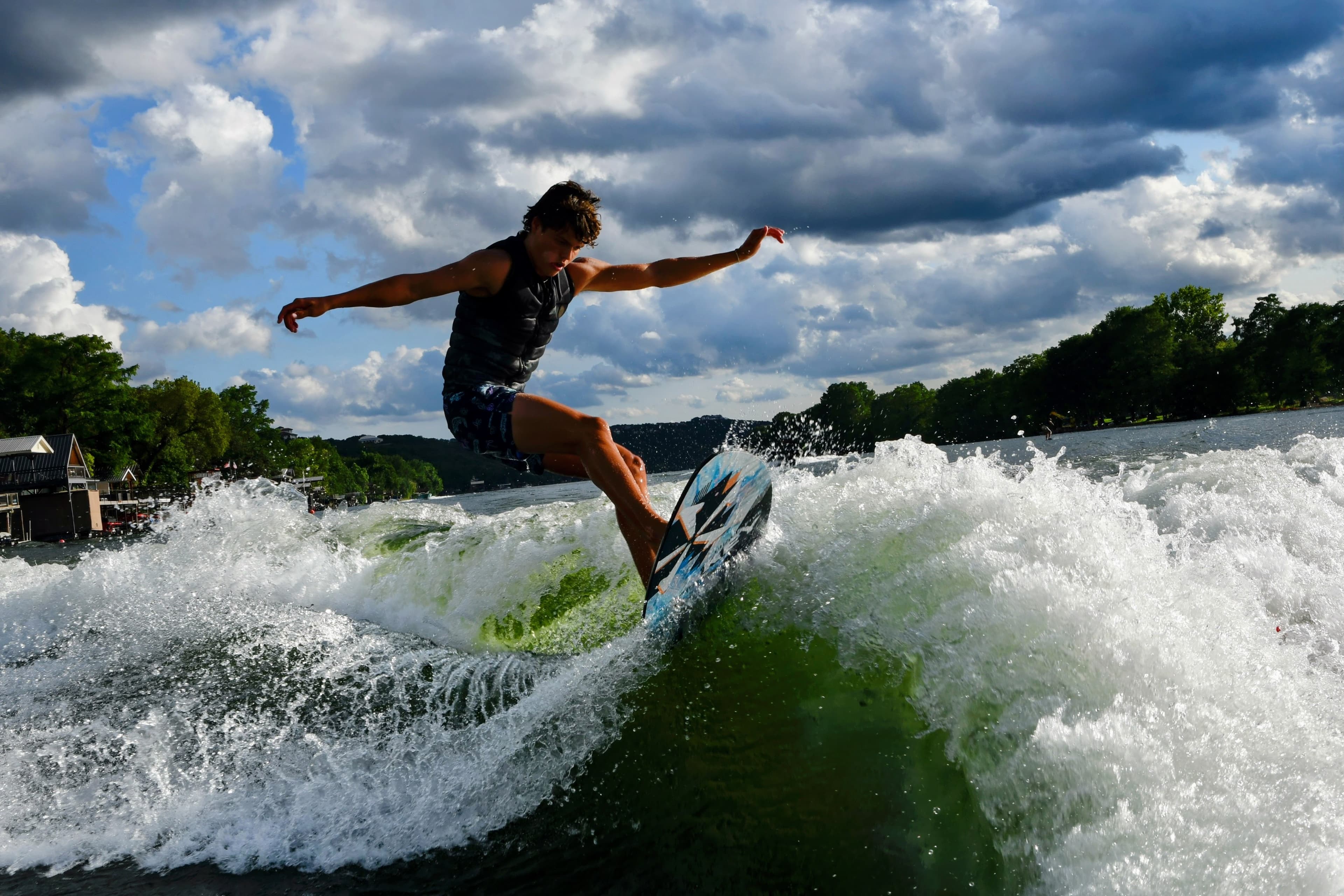
Dropping the rope is the single most defining moment in wakesurfing: the instant you stop holding on, find the energy of the wave, and realize you are being pushed by nothing but water.
It sounds simple. In practice, it trips up beginners and intermediate riders alike because the timing, board position, and body mechanics all have to come together at once. This guide breaks the process down into clear, repeatable steps so you can get there faster — whether you are riding on Lake Travis, Lake Austin, or anywhere else on the Highland Lakes.
What Does "the Pocket" Actually Mean?
Before you can drop the rope, you need to understand what you are aiming for.
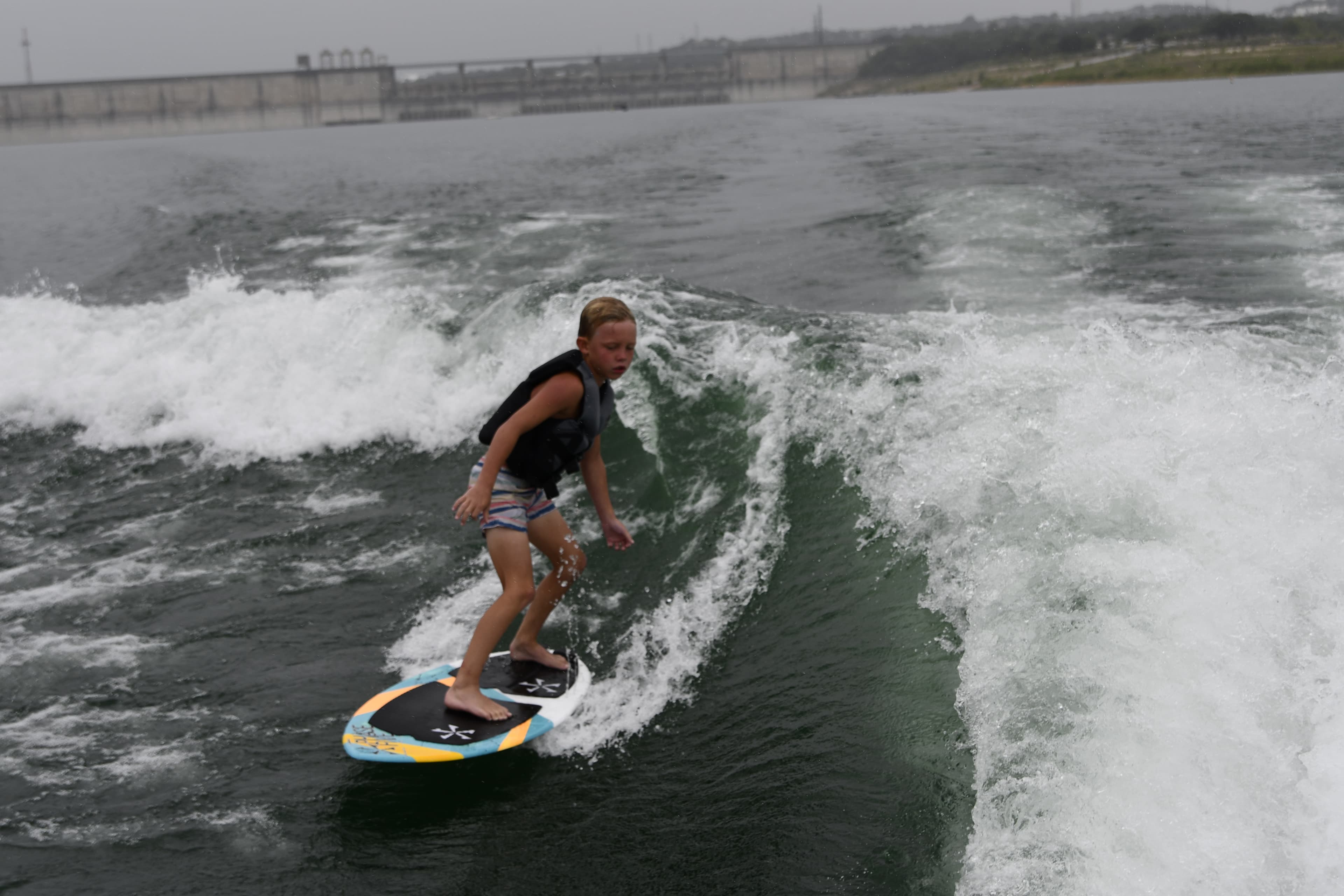
The pocket is the steepest, most powerful section of the wake wave — the spot just behind the crest where the water is actively pushing forward and up. When your board is sitting in the pocket, the wave does the work. Drift too far back toward the trough and the energy dies; drift too far forward past the crest and the wave spits you off the front.
Think of it like surfing a small ocean wave. You do not paddle to stay on a wave — the wave carries you. The rope is just a training wheel that keeps you close enough to find that zone. Once you can feel the push consistently, the rope becomes unnecessary.
Before You Try: Prerequisites
Dropping the rope is an intermediate milestone. Make sure you have these basics dialed in first:
- You can get up consistently from a deep-water start.
- You can ride in a straight line without yanking on the rope for balance.
- You can hold a light, relaxed grip — fingers, not fists.
- You can feel the difference between the boat pulling you and the wave pushing you.
If any of those are shaky, spend another session or two on fundamentals. Rushing the rope drop usually just leads to frustration.
Step-by-Step: How to Drop the Rope
Step 1 — Shorten the Rope
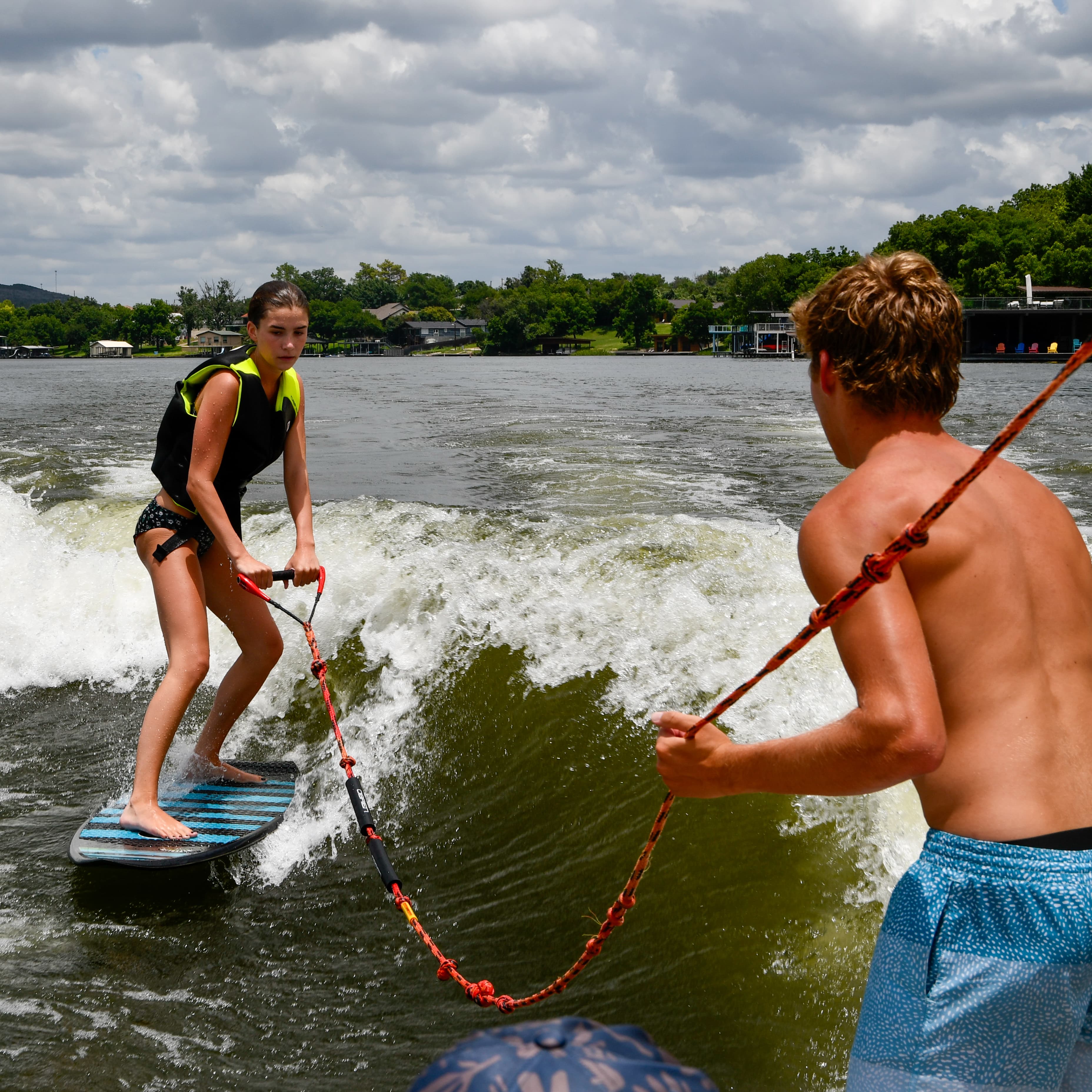
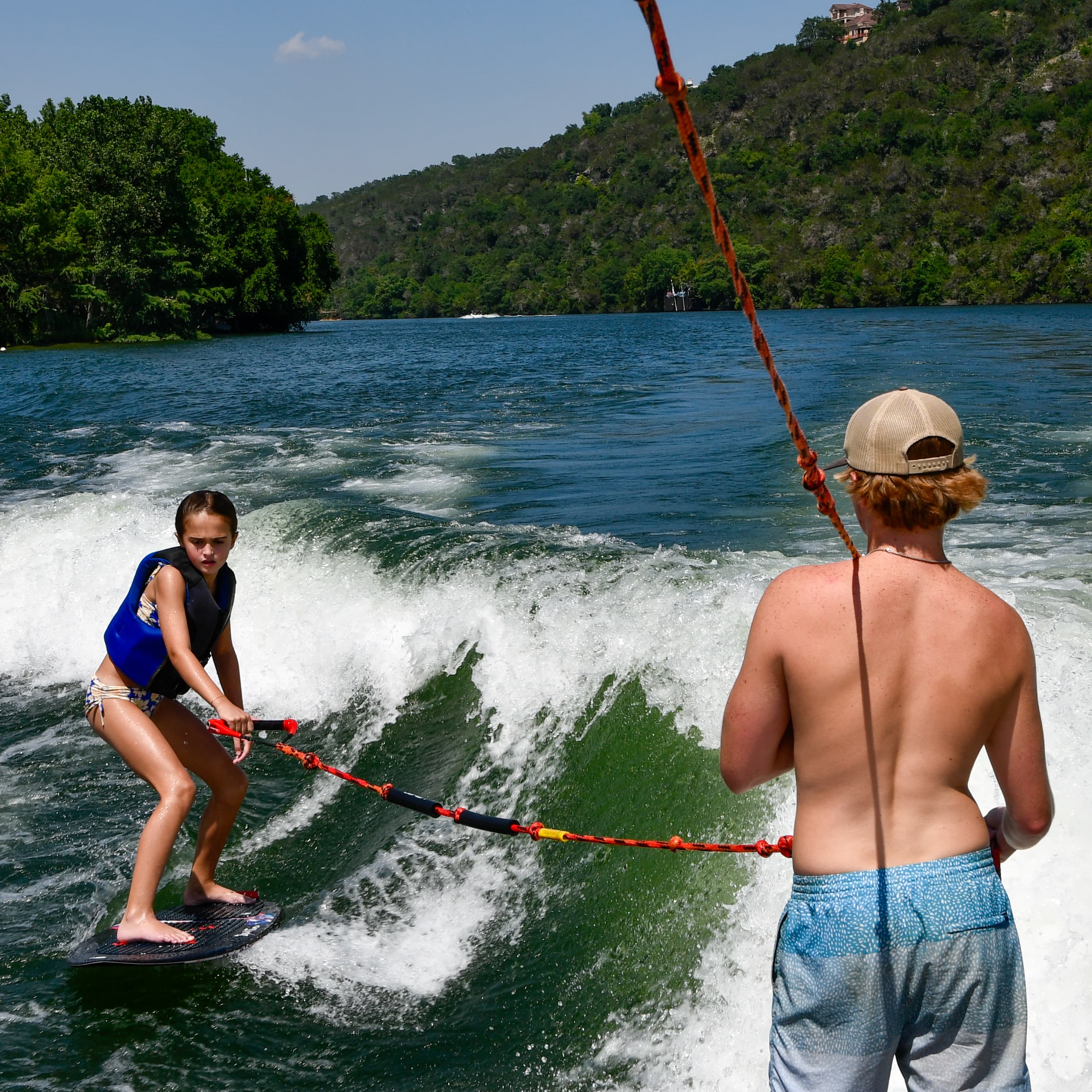
Most boats use a wakesurf rope that is 10 to 25 feet long, and beginners typically start at the longer end. Before you attempt to drop the rope, work your way closer to the boat by walking your hands up the rope, hand over hand, until you are roughly 8 to 10 feet from the swim platform.
At this distance you should be able to feel the wave pushing against the back of your board. If you cannot feel any push at this length, ask your driver to adjust boat speed slightly — wave pressure is heavily speed-dependent.
Boat speed tip: Wakesurf speed typically runs between 10 and 13 mph depending on the boat, ballast, and rider weight. Your driver should dial this in before you ever try to drop the rope. On our private lessons at Board Bound Wake Co, instructors set speed and ballast for each rider before the session starts, so you are always working with the best possible wave.
Step 2 — Get Into the Pocket
With the short rope in hand, ride actively toward the pocket rather than just hanging back.
Here is how to do it:
- Toe-side edge pressure: Gently press your toes down to flatten the board and let the wave push you forward.
- Heel-side edge pressure: Press your heels to slow yourself and drift back toward the trough.
- Target position: You want the nose of your board roughly even with the back corner of the boat — the point where the wave face is steepest.
Practice finding and holding this position with the rope in hand for several boat passes before you attempt the drop. If you can hold the pocket for 10 to 15 seconds with a completely slack rope, you are ready.
Step 3 — Read the Push
The push feels like gentle, constant pressure against the tail of your board. It is different from the tug you feel when the rope goes taut.
When the rope is slack and the wave is pushing you, notice:
- Your body naturally wants to lean slightly forward, toward the boat.
- The board feels stable and almost locked in.
- You are not working to stay up — the wave is holding you.
That sensation is your green light.
Step 4 — Drop the Rope (The Right Way)
Do not throw the rope sideways or let it fall into the water in front of your board — that is a tripping hazard. Instead:
- Get into the pocket with a slack rope.
- Let the handle drift toward the water beside you, keeping your dropping hand low.
- Open your fingers and let it go quietly.
- Immediately bring both arms out in front of you for balance, like you are reaching toward the boat.
That forward arm position is critical. Most riders who fall immediately after the drop were leaning back with their arms at their sides. Reaching forward shifts your weight and keeps the board in the pocket.
Step 5 — Pump to Stay in the Pocket
Once you are rope-free, the wave will drift you back toward the trough if you do nothing. Use small, rhythmic pumps to generate forward drive:
- Pump: Press your front foot down, let the board dive slightly toward the trough, then spring off your back foot to push the nose back up toward the crest.
- Rhythm: Think of it as a gentle rocking motion, front-to-back, about once per second.
- Arms: Keep them moving with your body — out in front when you push forward, slightly back when you recover.
This is the same pumping motion used in ocean surfing to maintain speed on a slow section. It takes a few tries to find the right rhythm, but once it clicks it feels natural.
Step 6 — Stay Relaxed
Tension is the enemy of rope-free riding. When riders get nervous after the drop, they stiffen up, stop pumping, drift back, and fall. The fix is counterintuitive: soften your knees, breathe out, and commit to the pocket.
If you start sliding toward the trough, pump aggressively once or twice to drive yourself back up the wave face. If you slide too far forward and the wave pushes you into the back of the boat, gently press your heels to slow down.
Common Mistakes — and How to Fix Them
| Mistake | What Happens | Fix |
|---|---|---|
| Dropping the rope too far back | Wave has no energy at your position | Walk hands up rope before dropping |
| Throwing the rope forward | Rope wraps under the board | Let it fall to the side, not forward |
| Arms at sides after the drop | Weight shifts back, board stalls | Reach both hands toward the boat |
| Not pumping | Drift to trough, lose push | Start pumping as soon as rope leaves your hand |
| Tensing up | Stiff ankles kill edge feel | Bend knees, breathe, stay loose |
A Note on Board Choice
The right board makes the pocket easier to find and hold. Surf-style wakesurf boards — shorter, thicker, with a looser fin setup — are more responsive to pumping and give you better feel for the wave's energy. Skim-style boards are flatter and faster but less forgiving for beginners working on the drop.
At Board Bound Wake Co, Phase Five boards are a crew favorite for their lively feel and reliable pocket hold. If you are not sure which board suits your style, your instructor can walk you through the options before you get in the water.
Practice on Lake Travis or Lake Austin
Lake Travis and Lake Austin both offer excellent conditions for working on the rope drop. Lake Travis has more open water and less traffic on weekday mornings, which means longer uninterrupted runs — ideal when you are repeating the same skill over and over. Lake Austin is narrower but produces glassy, predictable water that makes it easy to feel subtle changes in wave pressure.
Either way, early mornings on both lakes tend to give you the smoothest water before wind and boat traffic build up. Plan your session accordingly.
Dropping the rope for the first time is one of those moments you remember. Once you feel the wave carrying you on Lake Travis or Lake Austin without anything in your hands, you will understand why so many people get hooked on this sport. Get out there and find the pocket.
Frequently asked questions
- How long does it take to learn to drop the rope wakesurfing?
- Most riders who can already get up and ride consistently are able to drop the rope within one to two sessions of focused practice. The key is spending time finding the pocket with a slack rope before letting go — once you can feel the wave's push reliably, the drop itself usually happens quickly.
- Why do I fall as soon as I drop the rope?
- The most common reason is body position. Most riders fall because they let their arms drop to their sides right after releasing the rope, which shifts weight to the tail and stalls the board out of the pocket. Reach both hands toward the boat immediately after the drop to keep your weight forward and your board in the wave's push.
- What rope length should I use when learning to drop the rope?
- Work your way up to roughly 8 to 10 feet from the swim platform before attempting the drop. At longer rope lengths you are too far back in the trough where the wave has little energy. Walking your hands up the rope while riding is the standard way to get into the correct position.
- Does boat speed affect how easy it is to drop the rope?
- Yes, significantly. Wakesurf speed typically falls between 10 and 13 mph depending on the boat, ballast load, and rider weight. Too slow and the wave flattens out; too fast and the wave becomes too steep and short to hold a position. Your driver should find the right speed for your specific setup before you attempt the rope drop.