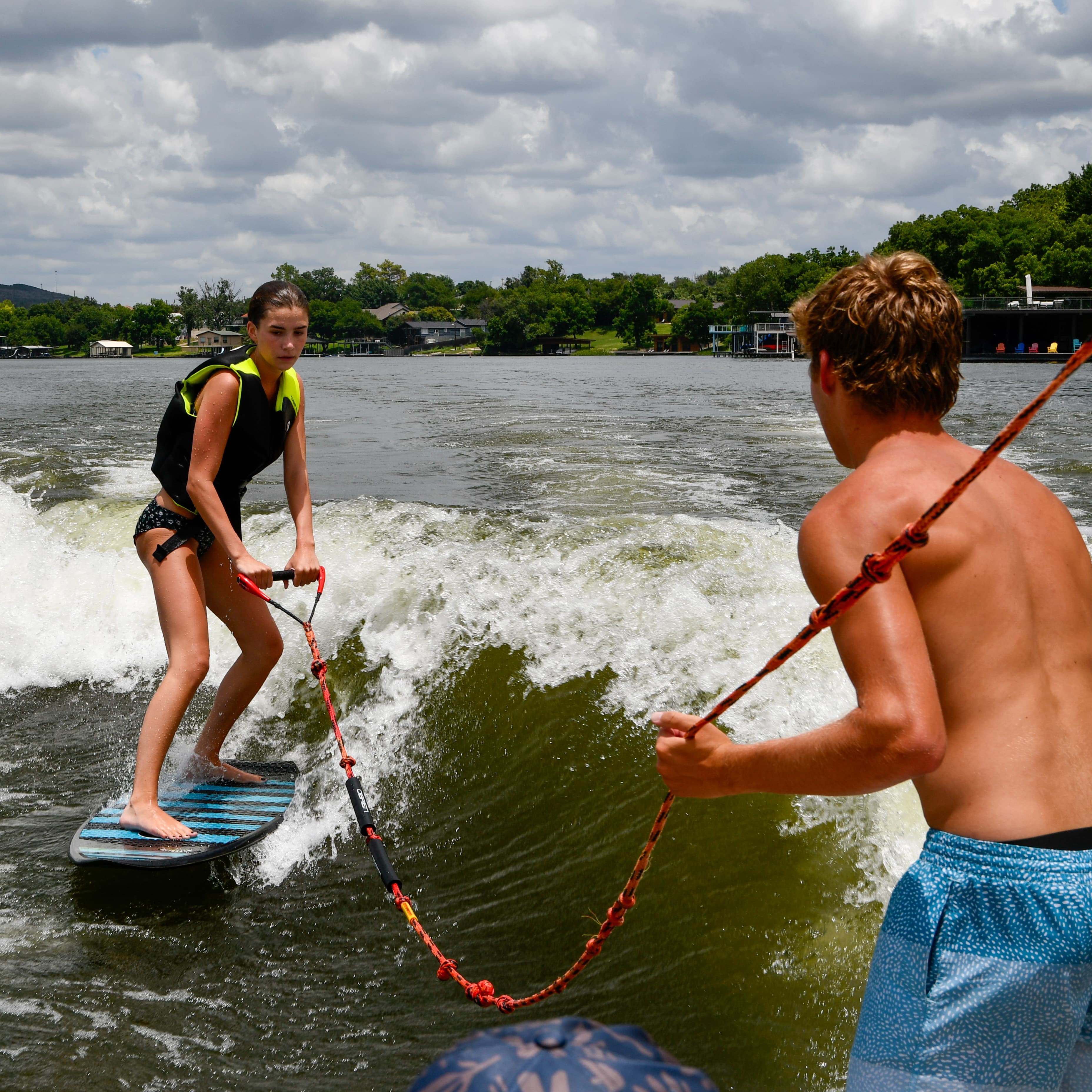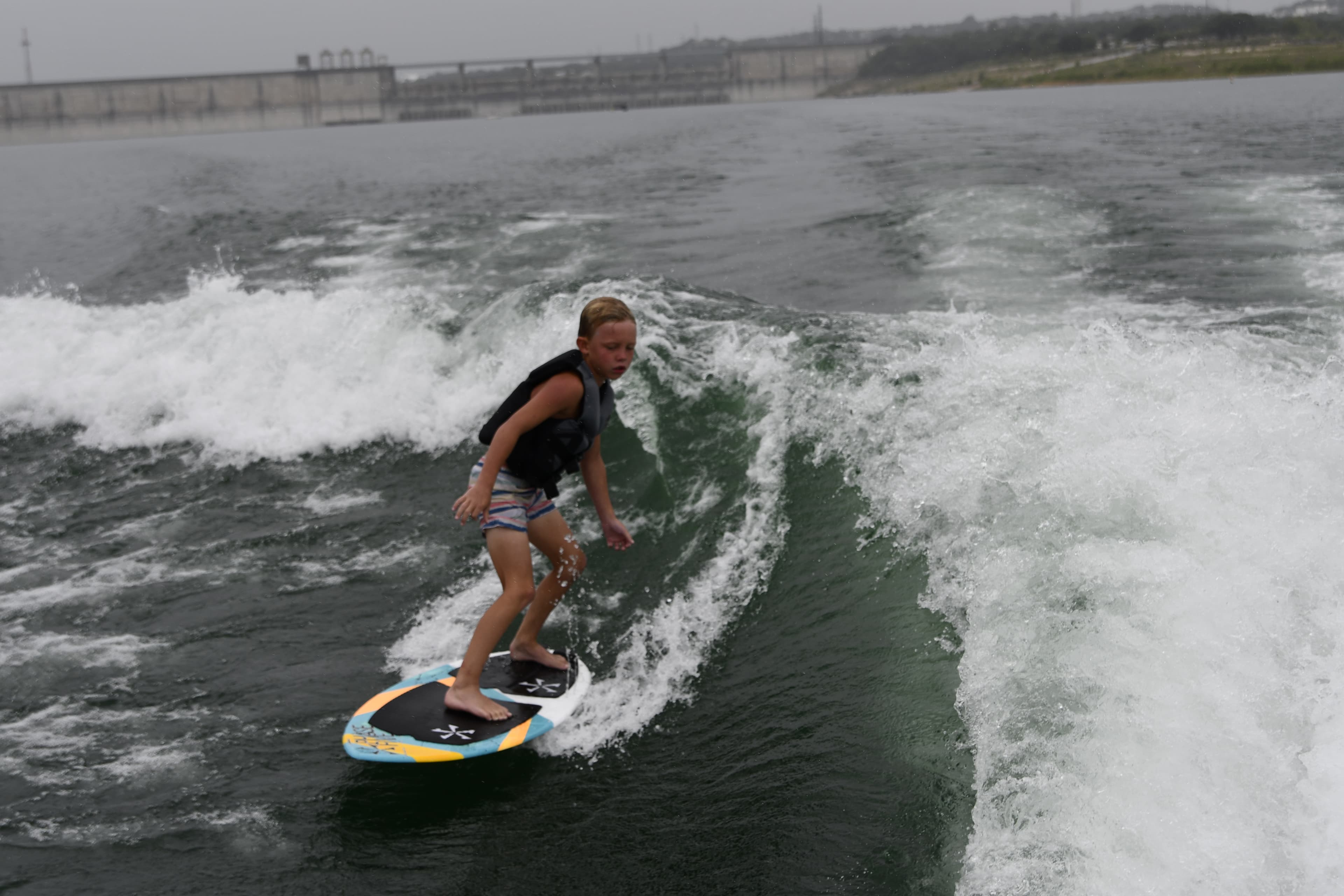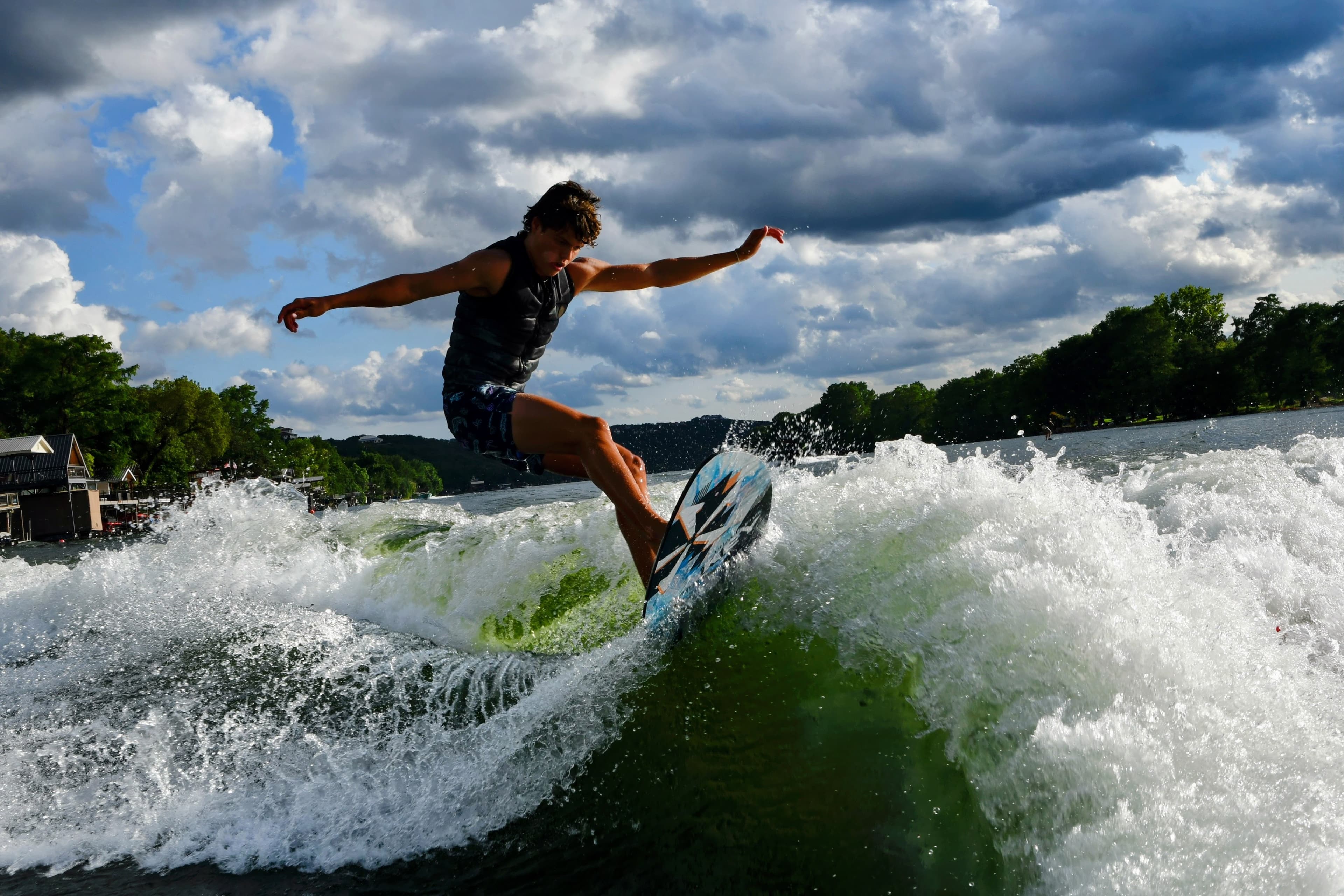
Wakesurfing is a tow watersport in which a rider surfs the endless wave created behind a specialized wake boat, and dropping the rope to ride hands-free is widely considered the sport's first major milestone.
If you have already had your very first session on Lake Austin or Lake Travis and gotten comfortable on the board, this guide is for you. Going rope-free requires a specific set of skills that build on top of each other. Work through them in order and you will get there faster than you think.
Why Going Rope-Free Feels Hard (and Why It Is Not)
Most new riders hold the rope too long. They use it as a crutch rather than a tool, which means they never develop the subtle weight shifts and foot pressure adjustments that actually keep you locked in the wave pocket.
The good news: the mechanics are simple. The boat does the heavy lifting. Your only job is to stay in a small, well-defined zone behind the wake boat and keep your center of gravity over the board.
What You Need Before You Try
Before you attempt to drop the rope, check all three of these boxes:
- Consistent pop-up. You can get from flat on the water to a stable riding stance in one smooth motion, without hesitation.
- Directional control. You can deliberately move forward and backward on the wave by shifting your weight, not by pulling the rope.
- Comfortable speed. You feel relaxed at the boat's cruising surf speed — typically 10–12 mph depending on boat setup — and you are not fighting to stay upright.
If any of those are shaky, spend another session on the fundamentals. Our instructors at Board Bound Wake Co build all three into every private lesson before a student ever thinks about dropping the rope.
Step-by-Step: How to Drop the Rope
Step 1: Find the Pocket
The "pocket" is the sweet spot on the wave — roughly three to five feet directly behind the boat's swim platform, in the curl where the wave face is steepest. This is the only zone where the wave will push you without the rope. If you are too far back, the wave goes flat and you lose all push. Too far forward and you outrun the wave.
Practice moving into the pocket while still holding the rope so you know exactly what it feels like before you let go.
Step 2: Loosen Your Grip
Once you are locked in the pocket, relax your front hand first. Let the rope go slack. You are not throwing it yet — you are just confirming that the wave is carrying you, not the rope.
If you feel yourself drifting back when you go slack, pump the board: dig your back foot into the tail to drive the nose of the board forward up the wave face. That forward thrust is how you generate speed on a wakesurf board without a rope.
Step 3: Drop the Rope to the Side
When the wave is doing the work and the rope is fully slack, swing it gently to the heel-side of the board (away from the boat) and let go. Do not toss it forward into the wake — that creates a tangle hazard. The rope handler on the boat will pull it in.
Signal to your captain before dropping. A thumbs-up means you are good; a thumbs-down or a hand across the throat means stop or slow down. On Lake Austin and Lake Travis, clear communication between rider and captain is especially important because both lakes carry recreational boat traffic that can create secondary chop.
Step 4: Use Your Arms for Balance, Not Decoration
New riders tend to either lock their arms at their sides or flail them randomly. Neither works. Keep your arms slightly out from your body — at roughly hip height — and use them as active counterweights. When the board tips to the toe side, your arms drift heel-side. Think of it like walking a tightrope.
Step 5: Pump to Maintain Speed
Once the rope is gone, pumping is your engine. To pump correctly:
- Shift weight to your back foot to sink the tail and load the fins.
- Immediately shift weight to your front foot to drive the nose forward and up the wave face.
- Repeat with a smooth, rhythmic motion — not a frantic bounce.
The size and frequency of your pump will depend on the wave. Steeper, more powerful waves (common behind well-ballasted boats) require fewer pumps. Flatter waves demand more constant movement.
Step 6: Stay Low
When in doubt, bend your knees more. A lower center of gravity gives you a fraction of a second longer to correct before a wobble becomes a fall. Most wipeouts happen when riders stand tall and stiffen up.
Common Mistakes and How to Fix Them
| Mistake | What It Looks Like | Fix |
|---|---|---|
| Riding too far back | Wave goes flat, rope goes tight | Pump forward, shift weight to front foot |
| Stiff knees | Small chop throws you off | Bend knees deeper, stay athletic |
| Looking down at the board | Posture collapses, balance goes | Eyes on the horizon or the back of the boat |
| Tossing the rope forward | Tangled rope, potential hazard | Drop it to the heel side, signal the boat first |
| Trying to drop too soon | Never find the pocket without the rope | Spend 10 minutes in the pocket holding a slack rope before letting go |
Lake Conditions Matter
On Lake Austin, the narrow channel and slower recreational traffic mean you will encounter less open-water chop. This makes it a forgiving environment for dropping the rope for the first time. The Texas Parks and Wildlife Department designates no-wake zones in parts of the lake, so captains know exactly where clean, uninterrupted surf runs are possible.
On Lake Travis, the wider open water means more room to run long stretches without interruption, but afternoon wind can build chop on the surface. Early morning sessions on Lake Travis — before 11 a.m. — tend to offer the glassiest conditions, which makes learning new skills noticeably easier.
At Board Bound Wake Co, our captains know both lakes intimately and position the boat to give you the cleanest possible run at whatever skill you are working on.
When to Book a Lesson vs. Figuring It Out Alone
If you have a friend who wakesurfs and a boat with proper ballast, self-teaching is possible — but slow. Video feedback, real-time coaching from the boat, and a captain who adjusts speed and wave shape for your specific body type and skill level dramatically shorten the learning curve.
Our private lessons include video analysis of your session, all equipment, and instruction tailored to wherever you are in the progression. Going from shaky beginner to rope-free in a single structured session is entirely realistic — we see it regularly on both Lake Austin and Lake Travis.
Ready to Drop the Rope?
Whether you are working toward rope-free for the first time or refining your pump to start throwing tricks, getting time behind a properly set-up wake boat with an experienced eye watching your technique is the fastest path forward.
Book a private lesson with Board Bound Wake Co and we will have you surfing hands-free on Lake Austin or Lake Travis before the day is out.
Frequently asked questions
- How long does it take to learn to wakesurf without a rope?
- Most riders can drop the rope within one to three sessions, assuming they have a consistent pop-up and basic balance. With structured instruction and video feedback — like what we offer in our private lessons — going rope-free in a single session is very achievable.
- What speed should the boat go for wakesurfing?
- Most wake boats run between 10 and 12 mph for wakesurfing. The exact speed depends on the boat's ballast setup, hull shape, and the rider's weight. Your captain will dial in the right speed for your session.
- Which side of the boat should I surf on?
- Wakesurfers ride on either the goofy side (right foot forward) or regular side (left foot forward), and the boat's ballast is weighted to create the best wave on whichever side the rider prefers. Let your instructor or captain know your stance before the session starts.
- Is Lake Austin or Lake Travis better for learning to wakesurf rope-free?
- Both lakes work well. Lake Austin's narrower, more protected channel tends to have calmer surface conditions that make early skill-building easier. Lake Travis offers more open water and longer uninterrupted runs. Early morning sessions on either lake give you the glassiest conditions.